Lighting That Works With the Way You Live
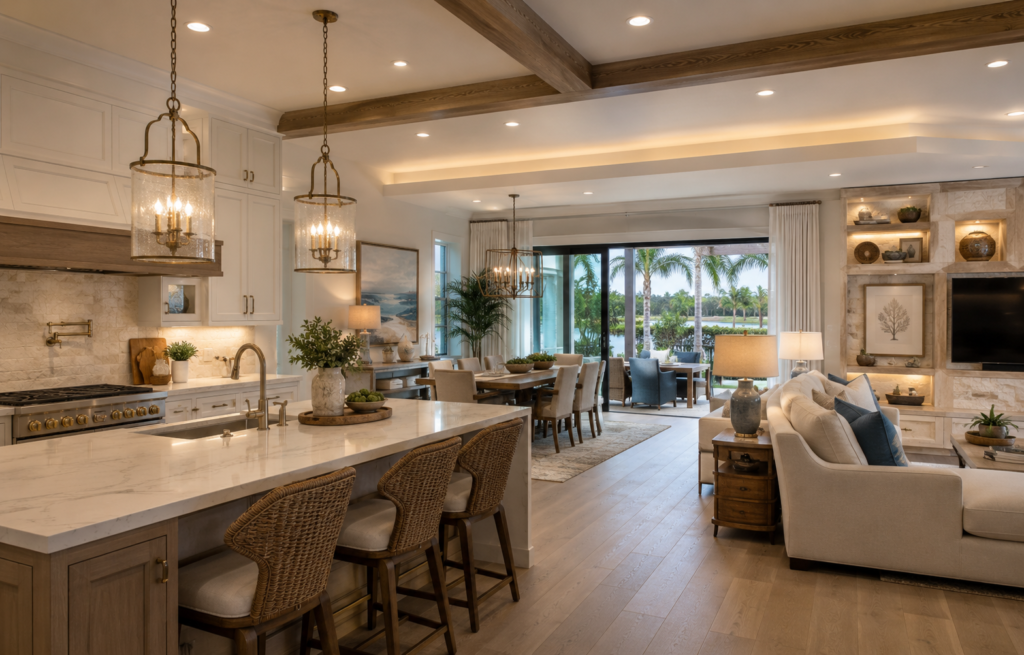
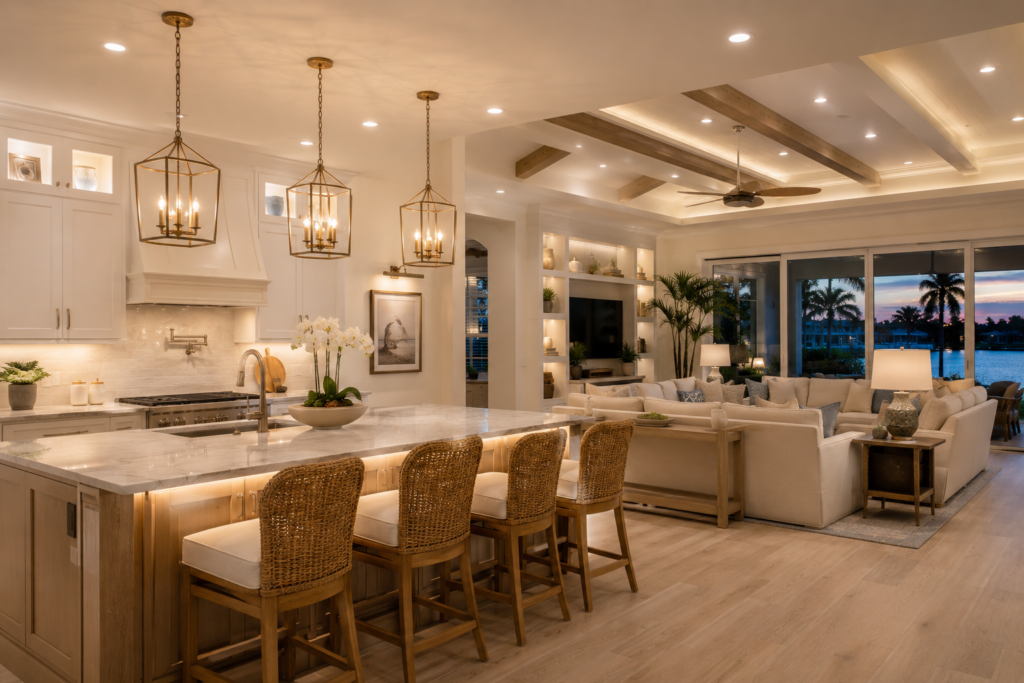
Thoughtful lighting design can completely change how a room looks and functions. I create lighting plans around the architecture, furniture placement, natural light and the way you actually use each space.
A good lighting plan goes far beyond choosing decorative fixtures. Everyday tasks need clear, comfortable light. Softer illumination can change the mood of a room, while accent lighting can highlight artwork, cabinetry, architectural details or specialty finishes.
I combine ambient, task and accent lighting with the natural light already in the space. Every fixture should have a purpose, whether it illuminates a kitchen countertop, highlights a favorite piece of art or creates a softer atmosphere in the evening.
When you’re building a custom home, renovating or updating a commercial interior, I coordinate the lighting with the rest of the design. I consider the finishes, furnishings, architecture and electrical plan from the beginning so everything works together.
Lighting Design for New Construction & Renovations
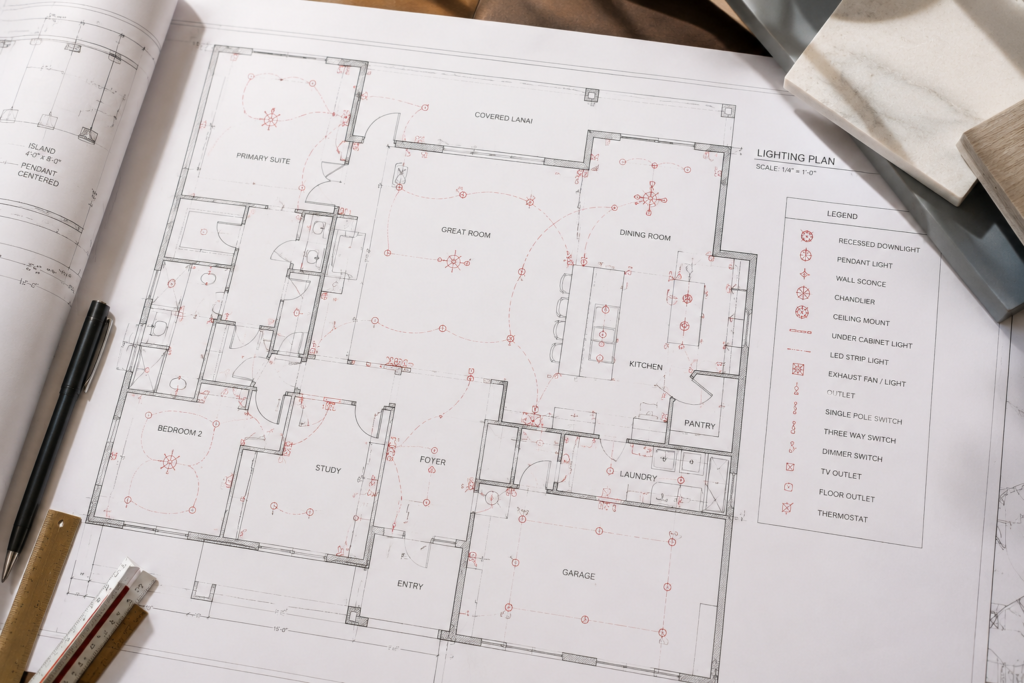
Lighting is easiest to get right when you consider it early in the project. During new construction and renovations, I review lighting locations early in the project. This helps identify where you may need additional fixtures, switches, dimmers, or electrical changes.
Practical details matter too. I look at kitchen work surfaces, bathroom mirrors, reading areas, artwork, ceiling heights, furniture placement and traffic patterns. I also consider decorative lighting, including chandeliers, pendants and sconces, so their size and placement work with the room rather than becoming an afterthought.
With more than 30 years of experience in interior design and construction, I’m comfortable working from plans and communicating with builders, electricians and other trades throughout the project.
What Lighting Design Can Include
Every project has different lighting needs. Depending on the space and scope of work, I can help with:
- Recessed lighting placement
- Kitchen island and dining pendants
- Chandeliers and decorative fixtures
- Bathroom vanity and mirror lighting
- Under-cabinet and task lighting
- Wall sconces and accent lighting
- Lighting for artwork and architectural details
- Dimmer and switch locations
- Fixture sizing and placement
- Coordinating lighting with furniture and space planning
- Reviewing selections with builders, electricians and other trades
Lighting decisions often affect other parts of a project. A chandelier needs to relate to the dining table below it. Pendants need the right relationship to an island. Bathroom lighting needs to illuminate your face rather than cast shadows from above. Even recessed lights need to be positioned around cabinetry, furniture and architectural features rather than laid out in a generic ceiling grid.
Decorative Lighting & Fixture Selection
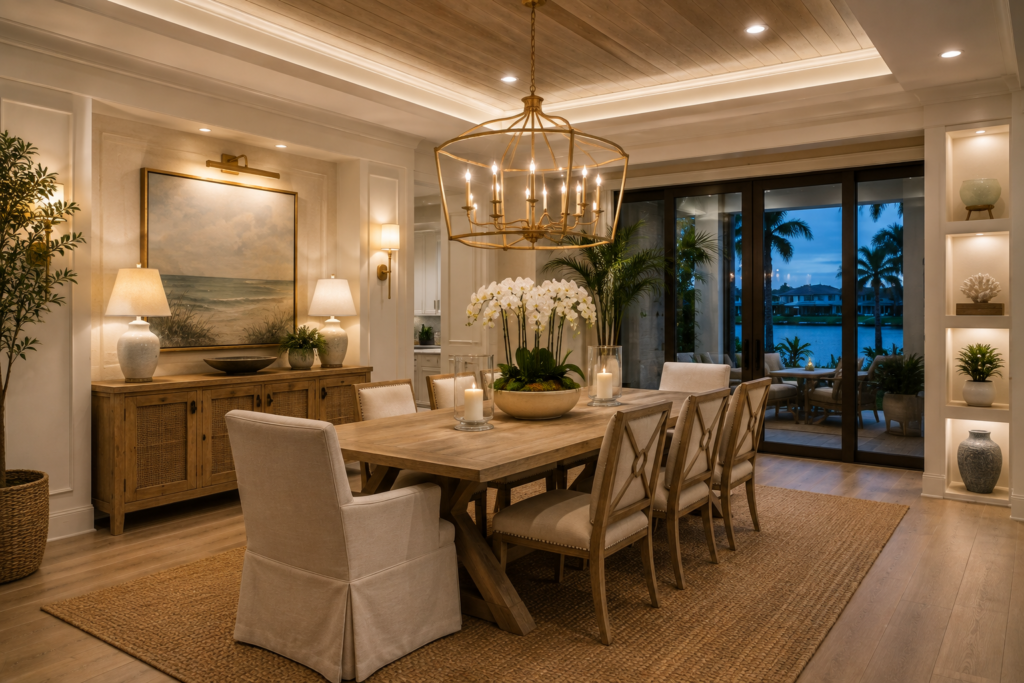
Decorative lighting is both functional and an important part of the room’s design. I help select chandeliers, pendants, sconces and other fixtures that work with the scale of the space, ceiling height, furnishings and architectural details.
A chandelier that’s too small can disappear over a large dining table. Oversized pendants can overwhelm a kitchen island or block sightlines. I consider those proportions before selecting a fixture, along with hanging height, light output, and how the fixture looks from different areas of the room.
Finishes also need to work with the materials already being used throughout the project. Brass, polished nickel, black, bronze and mixed-metal fixtures can all work beautifully when there’s a reason behind the selection. I coordinate lighting with cabinetry hardware, plumbing fixtures, furniture and other finishes so the room feels connected without everything having to match.
For new construction and renovation projects, I can coordinate decorative fixtures with the electrical plan. This allows the electrician to address locations and requirements before installation day.
Creating the Right Light for Each Space
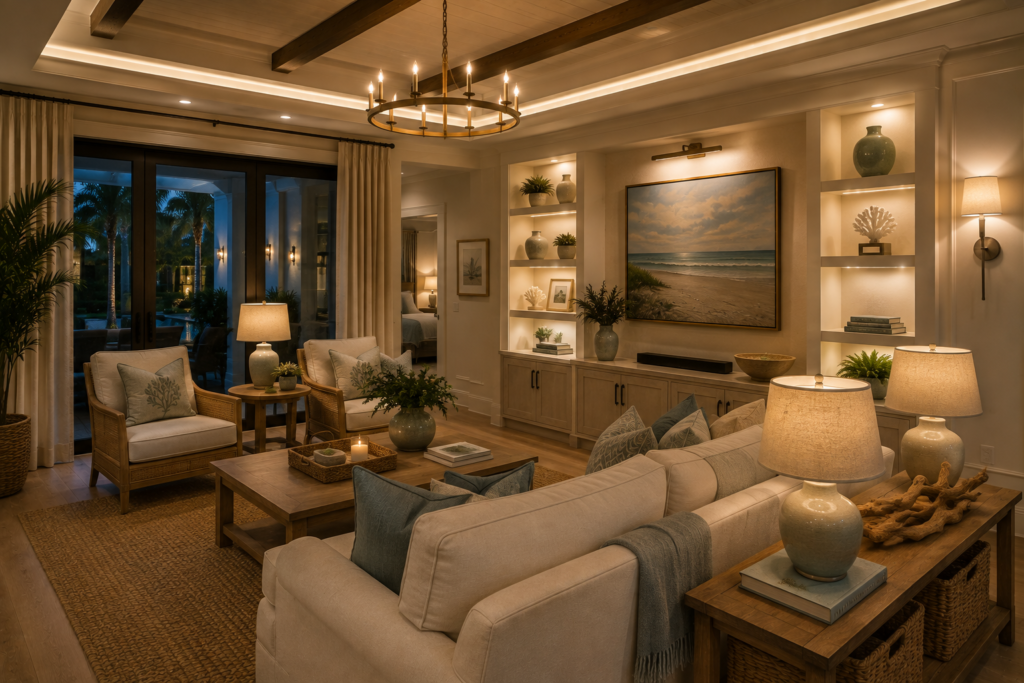
The fixture is only part of the lighting decision. The color and intensity of the light can completely change how paint colors, cabinetry, countertops, flooring and fabrics appear in a room.
Natural light changes throughout the day. I consider those changes along with how you use the room and where adjustable lighting would help. Kitchens need clear, functional light for preparing meals, while bedrooms and living spaces often benefit from softer layers of light in the evening.
Dimmers can make a tremendous difference. The same dining room may need brighter light for a family dinner and softer light when entertaining. In a bathroom, properly positioned lighting can make getting ready in the morning much easier without creating harsh shadows.
I also consider color temperature and LED selections so the lighting works with the finishes we’ve chosen. A beautiful paint color or stone countertop can look completely different under the wrong light.
Commercial Lighting Design
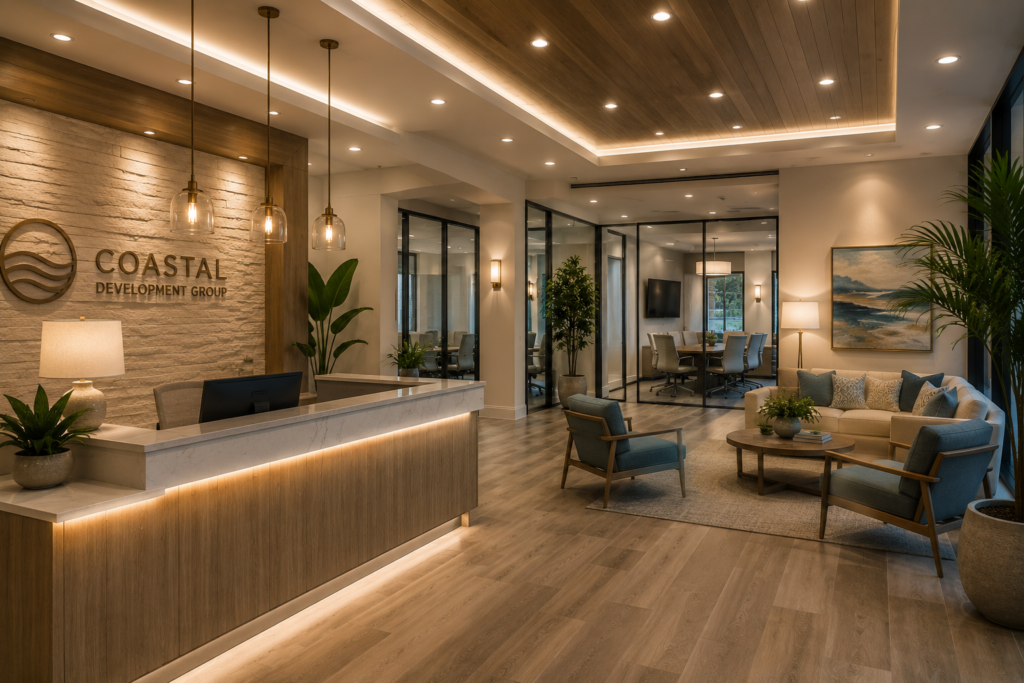
Most commercial lighting needs to do more than make a space look good. Employees, customers, and visitors need appropriate light for how the space is actually used.
I consider work areas, customer-facing spaces, displays, entrances and architectural features when developing a lighting plan. A retail environment may need accent lighting to draw attention to merchandise, while an office requires comfortable task lighting that doesn’t create unnecessary glare. Restaurants, reception areas and other hospitality spaces often need several layers of lighting to create the right atmosphere while still providing enough light to function safely.
I coordinate fixture selection, placement, and light levels with the overall interior design. When the project involves new construction or renovation, I can also work with the contractor, electrician, and other trades so design decisions are communicated before installation begins.
My goal is straightforward: the lighting should make sense for the space, the people using it and the work happening there.
Let’s Plan the Lighting for Your Space
Good lighting decisions are easier to make before construction is underway and electrical locations are already in place. Whether you’re building a new home, planning a renovation, updating one room or working on a commercial interior, I can help you develop a lighting plan that works with the architecture and the way you’ll use the space.
If you already have architectural or electrical plans, we can review them together. If you’re starting with an existing space, we can look at what’s working, what isn’t and where changes could make a difference.
Ready to talk about your project?